salakhalimun.com – The word trekking is often used lightly. It appears in travel ads, social media captions, and weekend plans, sometimes reduced to nothing more than a scenic walk with good shoes and a camera. Here in the deep rainforest of Mount Salak and Mount Halimun, trekking carries a much deeper meaning. It is not just about movement, distance, or reaching a viewpoint. Trekking is about entering a living ecosystem, slowing your pace to the rhythm of the forest, and learning how to move with respect through a landscape that has been alive long before we arrived.
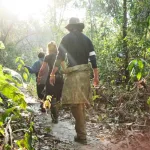
As you step onto a damp forest trail in Halimun Salak National Park, the air immediately feels heavier. Moss softens every rock. Cicadas pulse in waves. The canopy above filters sunlight into green shadows. This is where trekking reveals its true character, not as a sport to conquer nature, but as a quiet agreement between human and rainforest.
Trekking Is Not Just Walking
Walking is something we do every day without thinking. Trekking requires intention. In Salak and Halimun, every step is chosen carefully. Roots twist across the path like living ropes. Soft mud tests your balance. Small streams appear without warning, clear and cold, crossing the trail as if reminding you that water shapes this land.
Trekking means adapting to the terrain instead of forcing your way through it. It asks you to read the forest. You learn where to place your foot, when to slow down, and when to stop entirely. It is not about speed or distance, but awareness.
Listening Instead of Rushing
One of the first lessons trekking teaches is how to listen. The forest speaks constantly. Birds signal movement. Insects rise and fall in volume with the light. Leaves rustle in patterns that reveal wind direction or approaching rain. A trekker pays attention to these signs. Someone who rushes misses them completely.
Trekking Is Not About Comfort
Comfort belongs to resorts and paved paths. Trekking in Mount Salak and Mount Halimun means accepting discomfort as part of the experience. Humidity clings to your skin. Clothes never fully dry. Leeches sometimes appear after rain, quiet and persistent.
These conditions are not problems to be eliminated. They are reminders that you are a guest in a rainforest ecosystem. When you stop expecting comfort, something shifts. The forest stops feeling hostile and begins to feel honest.
Understanding Physical Limits
Trekking also teaches humility. Trails here are not always forgiving. Steep ascents test your breath. Long descents strain your knees. Knowing when to rest is part of trekking wisdom. Pushing beyond your limits does not make you stronger in the forest. It makes you careless.
Trekking Is A Relationship With Place
True trekking builds a relationship with the land. In Salak Halimun, this relationship deepens over time. You begin to recognize certain trees, the way a bend in the trail signals a river ahead, or how fog settles differently in the morning compared to late afternoon.
This familiarity creates respect. You stop seeing the forest as scenery and start seeing it as a system. Every fern, fungus, and insect has a role. Trekking means moving through this system without disrupting it.
The Role Of Local Knowledge
Local guides understand these relationships deeply. They know which paths flood after rain, where wildlife prefers to cross, and which areas are culturally sensitive. Trekking without this knowledge risks damaging both nature and tradition. Listening to local insight is not a limitation. It is a privilege.
Trekking Is Not About Reaching The Summit
Many people believe trekking only matters if there is a peak at the end. In Mount Salak and Mount Halimun, some of the most meaningful treks never reach a summit at all. They follow rivers, pass hidden waterfalls, or loop through ancient forest corridors.
The journey itself holds value. The smell of wet earth. The sudden opening of the canopy revealing distant ridges. The quiet moments when everyone stops speaking because the forest has taken over the conversation.
Letting Go Of Achievement
Trekking loses its meaning when it becomes a checklist. Distance covered and elevation gained fade in importance when compared to what you notice, feel, and learn along the way. In this rainforest, achievement is measured in awareness, not altitude.
Trekking Is An Act Of Responsibility
Every step leaves an impact. Responsible trekking acknowledges this truth. Staying on established trails protects fragile undergrowth. Carrying out all waste keeps rivers clean. Keeping noise low allows wildlife to continue its routines undisturbed.
In Halimun Salak National Park, trekking ethics are not optional. They are essential for conservation. This park shelters one of Java’s richest biodiversity zones, including rare birds, endemic plants, and delicate watershed systems.
Respecting Sacred Spaces
Some areas of the forest hold spiritual significance for local communities. Trekking respectfully means understanding when silence is required, when access is limited, and when certain actions are inappropriate. Cultural respect is as important as ecological care.
Trekking Is Not An Escape From Reality
Many people seek trekking as a way to escape daily life. While the forest does offer peace, trekking is not about avoidance. It is about reconnection. The rainforest reflects reality clearly. Weather changes quickly. Effort has consequences. Cooperation matters.
These lessons follow you home. Patience learned on muddy trails carries into daily challenges. Awareness sharpened in the forest improves how you move through crowded cities.
Carrying The Forest With You
Trekking does not end when the trail does. The mindset stays. You notice green spaces differently. You value water more deeply. You move through the world with greater care.
Trekking Is A Slow Conversation
The rainforest does not reveal itself quickly. Trekking is a conversation that unfolds slowly. The longer you stay present, the more the forest shares. Subtle orchids hidden on tree trunks. Animal tracks pressed into soft earth. Shifts in temperature that signal elevation change.
This slowness is a gift. In a fast world, trekking restores a natural pace.
Why Salak Halimun Is Special
Mount Salak and Mount Halimun offer a rare combination of accessibility and wilderness. Dense primary forest still thrives here. Waterfalls remain unspoiled. Wildlife continues to move freely. Trekking in this region is not a manufactured experience. It is real, unpredictable, and deeply rewarding.
Trekking Is Not For Showing Off
Social media often turns trekking into performance. Photos replace presence. In Salak Halimun, this mindset feels out of place. The forest does not respond to spectacle. It responds to humility.
The most meaningful trekking moments are often unphotographed. Shared smiles during a rest stop. Quiet understanding when rain begins. The feeling of standing beneath towering trees knowing you are small and that this is enough.
Choosing Presence Over Proof
When you trek for yourself instead of an audience, the experience deepens. You notice more. You remember more. The forest becomes a memory written into your senses rather than stored on a screen.
What Trekking Truly Offers
Trekking in Mount Salak and Mount Halimun offers clarity. It strips away excess and reminds you what matters. Breath. Balance. Awareness. Respect.
It is not about conquering nature, escaping life, or collecting achievements. Trekking is about walking gently through a living world and allowing it to change you.
A Final Step Forward
When you understand what trekking really means and what it does not, every journey becomes richer. The forest welcomes those who listen, move carefully, and walk with intention.
So, if you’re ready to explore the wonders of national parks and understand what makes them important, head over to our REQUEST PAGE and let’s start planning your adventure. Or you can simply CLICK THIS LINK to chat with us on WhatsApp. See you in Java!